
Why Email Marketing Still Offers the Best Return on Investment
A subscriber’s inbox stays completely stable, in contrast to social feeds and search engine algorithms that change with each update. Email continues to be one of the most lucrative channels because of its unwavering dependability.
The loudest channel is the newest platform, the popular format, or the algorithm that everyone is attempting to figure out is to typically where marketing resources are directed. Email is rarely given that much attention. It doesn’t have a trending page, discovery feed, or viral moment.
However, the return on investment statistics consistently indicates that email is still one of the most consistently profitable channels for businesses to engage in. The figures below show why this is still the case and what distinguishes companies who are achieving significant outcomes from others that are only sending out newsletters.
Email continues to surpass nearly everything else
One response always emerges when asked which channel truly generates revenue: 59% of marketers choose email as their most successful revenue-generating channel, far ahead of social media (14%) and paid search (12%). Return on investment (ROI) reflects this disparity, with email yielding an average ROI of around $36 for every $1 invested, up to over 45:1 for retail, e-commerce, and consumer goods firms. Strong email results are not exclusive to organizations with huge marketing teams; companies paying as little as $1 to $500 per month claim an average ROI exceeding 3,800%. Even lesser expenditures work well.
The majority of the labor-intensive tasks are automated
A disproportionate part of the outcomes are now attributable to a comparatively small portion of email traffic. With only 2% of all send volume, automated emails account for around 37% of all email-driven sales and create about $2.87 in revenue per send, compared to about $0.18 for one-off campaigns—a difference of more than fifteen times. Automation has evolved from a nice-to-have add-on to the foundation of a professional email program because welcome sequences, abandoned-cart reminders, and post-purchase follow-ups continue to function in the background long after they are created.
The largest lever for performance is segmentation
One of the quickest ways to do poorly is to send the identical message to every person on the list. According to certain benchmarks, segmented mailings generate many times more income than a single blanket email sent to the whole list. Segmented campaigns routinely outperformed unsegmented ones by a significant margin. One wide campaign can be divided into numerous sharper, more relevant ones by segmenting an audience based on purchase history, engagement level, or stage in the customer journey. Relevance is what keeps subscribers opening, clicking, and making purchases rather than ignoring or unsubscribing.

Whether or not any of this matters depends on deliverability
If the email never makes it to the inbox, none of these tactics will be of any use. Approximately one in six valid marketing emails never make it to the intended recipient, according to the global average inbox placement rate of 83.5%. Protecting deliverability—through clean lists, unambiguous unsubscribe choices, and consistent sending patterns—is just as crucial as crafting a compelling subject line since poor sending behaviors, ambiguous opt-ins, and low engagement rates all erode sender reputation over time.
Most people genuinely read emails on their phones
Nowadays, about half of all email openings occur on mobile devices, and the majority of email is read while on the go rather than at a desk. Before the subscriber even finishes scrolling, a campaign that appears professional on a laptop screen but loads slowly, employs small writing, or conceals the call to action off-screen on a phone is losing attention. Short paragraphs, big buttons, and quick-loading graphics are examples of mobile-first design, which is becoming standard practice rather than a choice. Also, emails can offer a straightforward way for companies in the USA and London, competing for consumers in a busy market, to remain in touch with current clients.
You can't trust every open
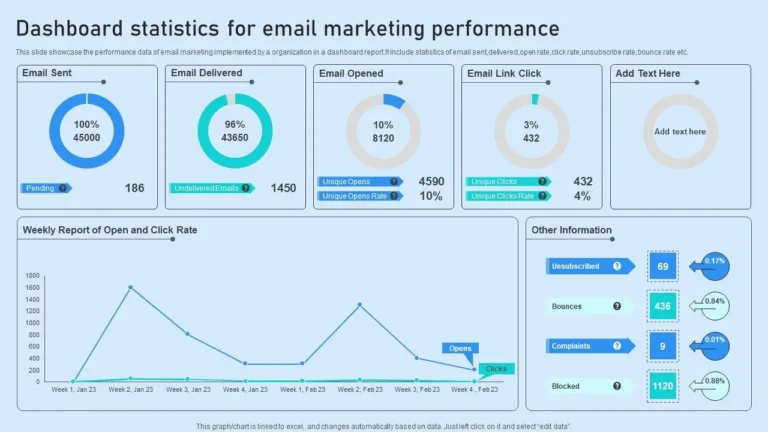
In the past, open rate was the primary indicator of email success, but in recent years, it has become much less dependable. Reported open rates may be greatly exaggerated since a considerable portion of Apple Mail users—nearly half of all recorded opens—have their emails automatically registered as opened by Apple’s Mail Privacy Protection. Because of this, seasoned marketers are increasingly focusing on clicks, conversions, revenue per email, and unsubscribe rate—actions that indicate if a subscriber actually interacted rather than just had a picture downloaded in the background.
Constructing a channel that combines
Email has an edge over social media and sponsored search since it compounds. An email subscriber has already consented to hear from the company in the future, but a follower might be lost the instant a platform’s algorithm changes, and a search visitor might never return to the website. Instead of renting a connection from a platform that may change its rules at any time, every well-timed, pertinent email sent to that list strengthens the relationship that a firm owns wholly.
Email marketing doesn’t require a viral moment to be justified in the budget; for years, the return-on-investment statistics has consistently shown this. Businesses that automate the right moments, segment their audience with purpose, safeguard their deliverability, design for mobile, and measure engagement honestly rather than chasing an inflated open rate are the ones that see the best results, not those that send the most emails. When handled appropriately, the inbox is not a residual marketing channel. It’s one of the few that a company actually owns.