
Being the best doesn't have to mean being invisible.The Argument in Favor of SEO
Many businesses fall into a quiet trap: they think that if their product is great and their website is functional, people will find them on their own.An unseen, well-designed website is like a business hiding on a street that nobody goes to. The shelves are stocked and the lights are on, but there is never any foot traffic. In the meantime, a rival with a subpar product that is well-represented on Google’s first page is gaining over clients who were unaware that there was a better choice.
The purpose of SEO is to fill this vacuum. Nobody can genuinely guarantee that search engine optimization will put you at the top of the search results. In reality, it makes a website easier for search engines to comprehend and easier for actual customers to locate when they’re already searching for precisely what that company has to offer. When done correctly, SEO for businesses is the link between a quality product and the consumers that require it.
Search Is Motivated by Intent, Not Randomness
Every Google search, even the most ambiguous ones, has a purpose.
A person looking for “what is SEO” is most likely still learning about the subject. A person looking up “SEO agency pricing” is evaluating their possibilities. A person looking for “SEO consultant near me” is probably on the verge of employing one.
This is known as search intent, and it modifies the way that material should be written. Asking a more pertinent question—what does the person typing this truly want to take away—helps avoid creating a page centred around a single term. Google has consistently encouraged website owners to provide unique content that prioritises people above pages designed only for search engine optimisation.
Why Being Discoverable Is Its Own Task
Consider a website as having three sections: the blog is the help desk that responds to inquiries before a visitor even contacts a salesman, the service pages are the shelves, and the homepage is the entryway.
It takes a rather wide range of moving parts to get people through that door:
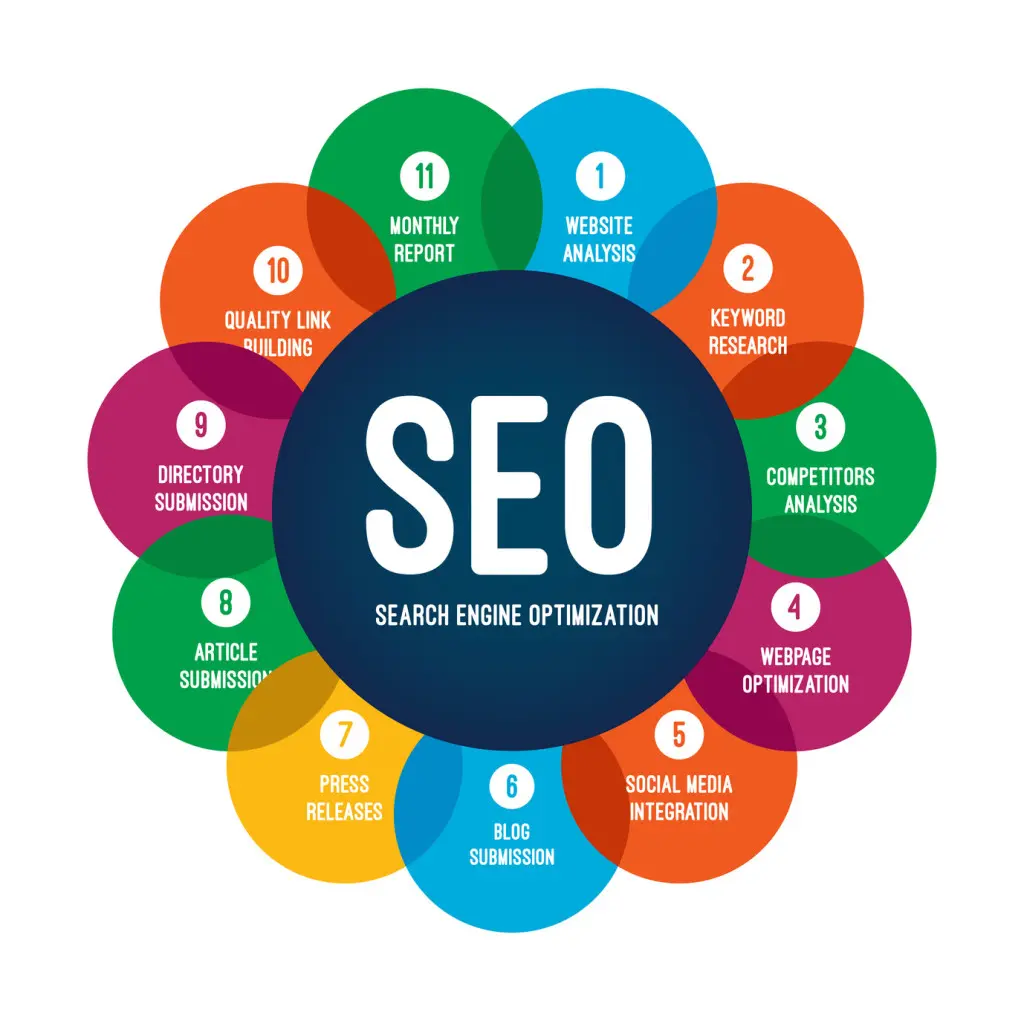
- Investigating the terms and phrases that people really look up
- Composing material that really addresses the queries
- Resolving technological problems that prevent crawling or indexing
- Organising pages so that search engines and readers may navigate them
- Ensuring the website functions properly on mobile
Search results are continuously changing due to dozens of signals, so none of these alone guarantee a ranking. However, ignoring them usually ensures the opposite: lack of visibility.
Quit Counting Keywords and Begin Responding to Inquiries
Treating a term like a target to strike as many times as possible is a common mistake. Let’s say a company wishes to rank in “digital marketing.” Seldom is anything worth reading created by repeating that precise word over and over on a page.
Mapping out the actual queries individuals have about that subject—such as what precisely qualifies as digital marketing—is a more successful strategy. Which channel is most effective on a tight budget? What role does SEO play in the whole picture?
Content that solves a problem is superior to content that promotes a product.
A website’s visitors are not looking for promotional language. They arrive with an issue: a query that needs to be addressed, a comparison that needs to be made, or a choice that they are attempting to reach.
Because of this, titles like “7 Mistakes Killing Your Social Media Engagement” typically do better than generic ones like “Benefits of Social Media Marketing.” The first one identifies an issue that the reader is already aware of. The second one merely explains a subject.
Good content relies more on concrete examples, detailed instructions, and frank trade-offs than on ambiguous assurances. Success is measured by more than simply a click. It’s whether or not the reader believes they have learnt something after finishing the page.
Technical SEO: The Basis No One Notices
If there are issues with the website underlying the content, it might still be very good. Search engines must be able to properly crawl a website, index its pages, and distinguish between nearly similar or duplicate URLs.
This entails keeping an eye on details that most users are unaware of, such as whether the website functions effectively on mobile devices, how quickly pages load, if HTTPS is configured correctly, whether links are broken, and whether the layout of the website makes sense. The plumbing is what makes everything else possible, even if it’s unseen work.
The goal is the right kind of traffic, not more.
Treating the number of visitors as the scoreboard is tempting. However, the value of 5,000 monthly visitors who are not interested in what is being offered is less than that of 1,000 visitors who are actively seeking it out.
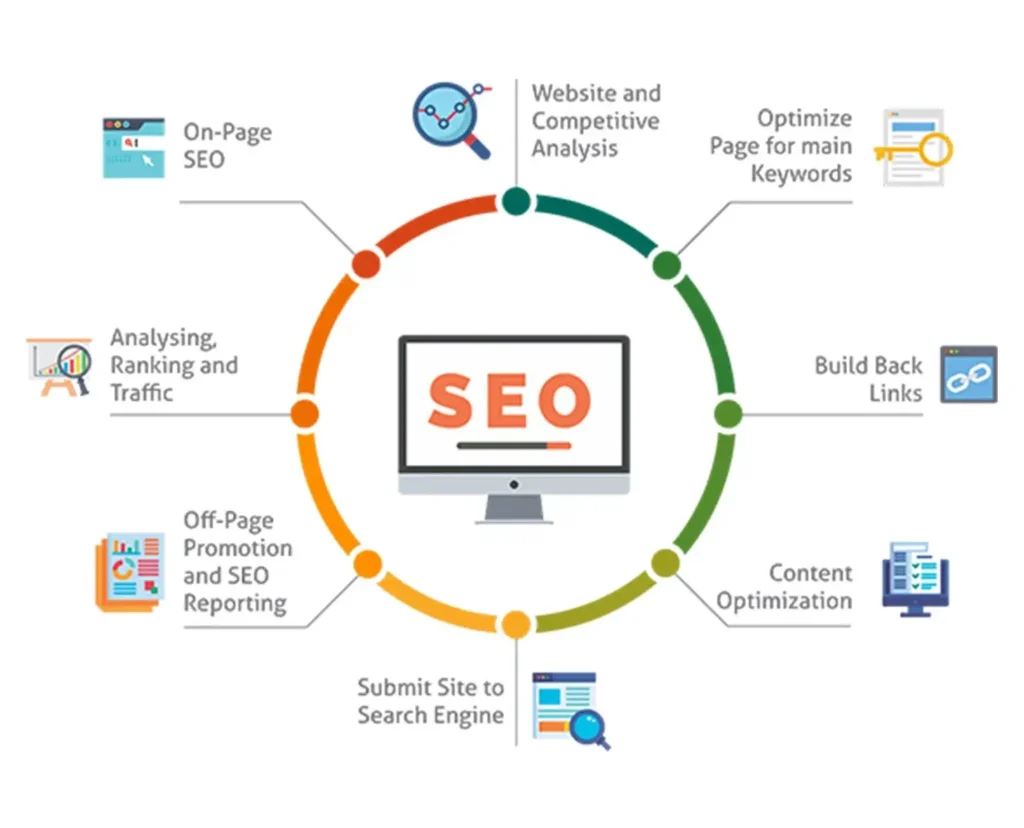
Because of this, more intelligent evaluation considers organic clicks, search impressions, click-through rates, and—above all—the percentage of those visits that result in actual inquiries or purchases. The purpose of tools like Google Search Console is to demonstrate which queries are genuinely attracting the appropriate type of visitor.
The objective doesn't change while the rules do.
The very nature of search is evolving. These days, AI-powered search experiences coexist with conventional results, and more individuals are using social media and videos to get answers.
Picture a consumer looking for a London SEO professional on Google. A significant portion of the customer’s attention has already been captured by the companies that appear on the first page.
Nevertheless, Google has made it plain that the essentials—original, helpful, and well-organized content—remain important in these more recent versions.Platforms will always evolve. Algorithms will continue to evolve. What won’t change is that consumers will continue to ask questions, and companies who regularly provide excellent answers will continue to appear in the results.
The beginning, not the end, is being proficient in your field. Online exposure is what transforms quality into opportunity, and SEO serves as a link between a company that merits notice and those who are already looking for precisely what it has to offer.
It was never the best strategy to manipulate a rating. It’s about figuring out what people are really seeking for, matching that intent honestly, creating a website that fulfils it, and keeping an eye on whether it’s truly working.